Map & Globe Skills
The ability to properly read maps and globes gives you an opportunity to explore different places, people, and cultures in the real world. These resources, teaching tips, and ideas will help make it easy for your children to learn to read and understand maps and globes.
Activities & Experiments
Postcard Kids
Geography Postcard Kids Project started for homeschooled children around the world in October of 2002. It is intended to help enhance geographic studies by sending postcards from their local area to other postcard kids around the world.

Great States Board Game
What is the capital of NJ? Where is the Football Hall of Fame? These are just a few of the hundreds of questions players are asked as they adventure around the USA discovering state attractions and landmarks, capitals, state abbreviations, state locations and more. In order to answer the questions on the cards, players must look closely at the colorful USA map game board, becoming familiar with the geography of the country. Players must hurry to find the answers as the mechanical timer ticks. Contents: Game board, 100 Figure cards, 100 Fact cards, 100 Find cards, 1 spinner, 1 mechanical timer, and game rules. Duration of Play: 20 minutes. 2-6 players.

Name That Country Game
"Dear Pen Pal, Konnichi wa! We've been to see Mt. Fuji. Name my country! Sayonara, Michiko." Challenge your group with this fast-paced geography game, created in 1992 by Educational Insights, Inc. Everyone begins at the post office. Players twirl a finely printed spinner (built into the game board itself) to select one of 60 countries. If the player can correctly identify the country's location on the board's numbered map, he or she may advance along the path to the finish. Bonus moves are won by landing on "postcard" spaces, listening to the clues on one of the 40 postcards, and correctly identifying the pen pal's country. (The sample postcard above came from Japan.) A more challenging game can be achieved by requiring players to name the country's capital; answers are provided. --Liane Thomas
Teaching Tips & Ideas
Knowledge Quest
Knowledge Quest offers historical outline maps and timelines designed for the interactive study of world history and geography.
How I Teach a Large Family in a Relaxed, Classical Way: History
A look at teaching history across several grades using the classical method of education and a rotation of history every four years.
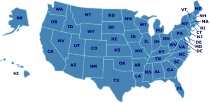
Looking for Another State?
Featured Resources
As an Amazon Associate, we earn from qualifying purchases. We get commissions for purchases made through links on this site.
A Reason For® Spelling
A Reason For® Spelling combines the latest research on how children learn to spell with all the strengths of traditional programs. It teaches highfrequency base words, plus hundreds of other word forms. Values-based stories set the theme each week and help make spelling fun. You'll find product information about A Reason For® Spelling here.

Christian Unschooling : Growing Your Children in the Freedom of Christ
Is unschooling incompatible with Christianity? Elissa Wahl and Teri Brown argue that they are not incompatible, but complementary. Unschooling offers a different path to learning. This book explains what unschooling is (and isn't) and offers support for your unschooling journey. Includes information and support, along with essays on how they unschool guided by the Lord.

Upside-Down Brilliance: The Visual Spatial Learner
Dr. Linda Silverman coined the term "visual-spatial learner" to describe the special and unique gifts of people who learn best through seeing and with images. This guide is a great resource as you support your homeschooling visual learner in discovering the best ways to learn and succeed.
Drawn Into the Heart of Reading
Drawn Into the Heart of Reading was developed for use with students of multiple ages at the same time, perfect for the homeschooling family. It is designed for use as an entire reading program or as a supplement to an existing program for students in grades 2-8.

The Unprocessed Child: Living Without School
This book shows how school is not necessary for a child to gain learning, socialization, or motivation. It offers a look at radical unschooling, a way of educating children without coercion, curriculum, or control. This look at a child who grows from childhood to adulthood with the experience of self-direction is a celebration of the success of unschooling. Covers topics such as parenting, self-discipline and self-motivation, socialization, and more.